Border & Treaty Updates
How the July 2026 Border Agreement Changes Daily Life for Gibraltar Residents
 • • 8 min read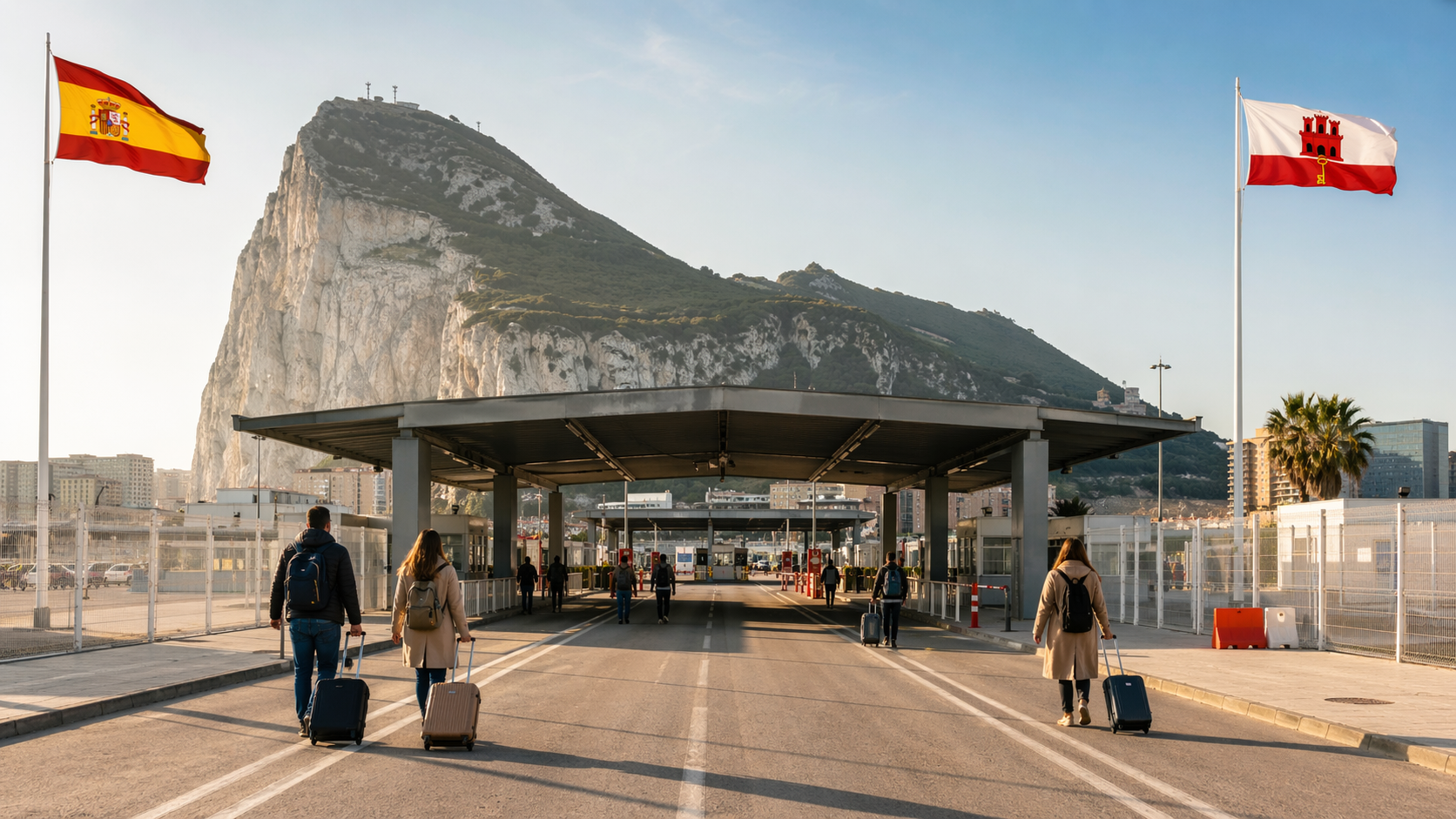
Last updated: April 2026
The Gibraltar-EU border agreement is no longer speculation. Confirmed for July 2026, it will bring Schengen protocols to the Spain-Gibraltar crossing for the first time. For people who live in Gibraltar, are planning to move there, or commute across the border daily, this is a meaningful change. Here is what it actually delivers.
Quick Summary
- Schengen protocols apply to the border from July 2026
- No passport checks for EU citizens crossing in either direction
- Border queue times expected to drop significantly for most crossings
- Gibraltar remains British Overseas Territory — no change to residency or tax status
What Does the Agreement Actually Say?
The agreement integrates Gibraltar into the Schengen Area for the purposes of border movement. This means:
- EU citizens cross without passport checks, using the same regime as crossing between Schengen countries
- British nationals (including Gibraltar residents) cross with identity document checks — standard for non-Schengen nationals entering the Schengen area
- Frontier workers (those who live in Spain and work in Gibraltar) gain streamlined crossing rights under the worker protection clauses
- Enhanced technology including biometric gates and EES (Entry/Exit System) cameras are planned for the crossing
What Changes for People Living in Gibraltar?
The most immediate change is practical: crossing into Spain becomes significantly faster for the majority of crossers. The current system requires checks on everyone — Gibraltar residents, Spanish nationals, EU workers, tourists — which creates bottlenecks during peak hours.
Under the new system, the EU national majority of crossers (Spanish residents, EU frontier workers, EU tourists) will use automated lanes with biometric verification. This removes a large chunk of the bottleneck. Gibraltar residents with British nationality will still require a document check but the queue will be shorter.
| Who You Are | Change from July 2026 |
|---|---|
| Gibraltar resident (British national) | Document check still required but shorter queues overall |
| EU national living in Gibraltar | No passport check crossing into Spain. Significantly faster. |
| Frontier worker (Spain resident, Gibraltar job) | Streamlined worker crossing rights, shorter queues |
| New mover to Gibraltar from EU | Spain day trips become essentially seamless. Easier lifestyle integration. |
What Changes for People Relocating to Gibraltar?
If you are considering moving to Gibraltar, the July 2026 agreement removes one of the historically cited frictions: the border. Previously, the possibility of long queues made the lifestyle calculation around day trips to Spain, shopping in La Linea, or dining in Algeciras more complicated.
From July 2026, the practical lifestyle integration between Gibraltar and the Campo de Gibraltar improves. Shopping, restaurants, beaches, and day trips to Tarifa or beyond become genuinely more accessible. For EU nationals relocating to Gibraltar, crossing into Spain becomes essentially seamless.
Gibraltar's residency rules are unchanged. Gibraltar remains British Overseas Territory and does not join the EU or Schengen area as a member. Tax arrangements, work permits, and immigration rules for moving TO Gibraltar are all unchanged. The agreement addresses the border crossing, not Gibraltar's constitutional status.
Gibraltar Residency: What You Still Need
For anyone planning to relocate to Gibraltar, the existing residency framework remains in place:
- Ordinary Resident status -- for those who intend to settle and work in Gibraltar. Requires employment or self-employment in Gibraltar.
- Category 2 status -- for high-net-worth individuals. Requires a minimum tax payment and approved housing.
- Work permits -- for non-Gibraltar/non-British nationals taking employment. Employer-sponsored.
The border agreement does not create a new route to Gibraltar residency. It makes crossing easier once you are resident, and makes living in the adjacent Campo de Gibraltar region more attractive for Gibraltar workers.
The Broader Impact on Gibraltar Life
The agreement signals a more stable long-term relationship between Gibraltar and Spain. For Gibraltar residents who have lived through years of border tension and uncertainty, the psychological shift may matter as much as the practical one. Gibraltar's economy, property market, and quality of life have all been shaped by border uncertainty for decades. That uncertainty is now significantly reduced.
The Bottom Line
The July 2026 border agreement is a genuine quality-of-life improvement for Gibraltar residents, particularly EU nationals and frontier workers. For people considering relocating to Gibraltar, it removes one of the historically cited downsides. Gibraltar's constitutional status, tax arrangements and residency rules are unchanged — but the daily experience of living on the Rock just got better.
Frequently Asked Questions
Does the July 2026 agreement mean I can move to Gibraltar freely as an EU citizen?
No. The agreement covers border movement, not residency rights. EU citizens can cross the border more freely, but living and working in Gibraltar still requires Ordinary Resident status or a work permit. The residency application process is unchanged.
Will British nationals face passport checks after July 2026?
Yes. Gibraltar residents with British nationality crossing into Spain will still go through a document check as non-Schengen nationals entering the Schengen area. However, overall queue times are expected to reduce significantly as the majority of EU national crossers use automated lanes.
Does Gibraltar join the EU or Schengen area under this agreement?
No. Gibraltar remains a British Overseas Territory and does not join the EU or the Schengen area as a member. The agreement applies Schengen border movement protocols to the crossing specifically, without changing Gibraltar's constitutional or political status.
How long will the border crossing take after July 2026?
Exact times will depend on implementation, technology deployment and traffic volumes. The expectation from both governments is a significant reduction from current peak-hour queues of 20-40 minutes. Some estimates suggest peak-hour crossing times could halve within 12-18 months of implementation.
Ethan Roworth is a Gibraltar-based writer and one of the founders of Norry Group. He covers the Gibraltar and Spain border region: cross-border work, daily life, business, and the markets that move between the two.